
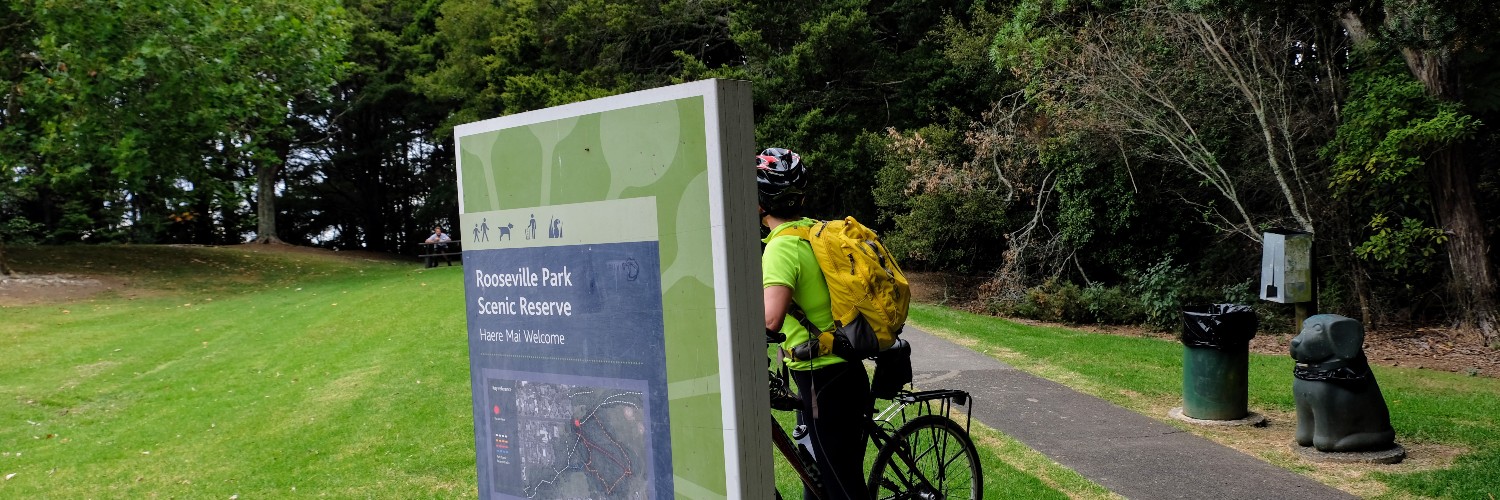
Sharing paths, tracks and trails
Sharing paths, tracks and trails (PDF 300KB)
Multi-use paths connect communities and give everyone access to the outdoors. With some consideration and common sense, we can all enjoy the trails together.
The golden rule
Share with care.
Show care for more vulnerable people—slow down, give space, and be courteous.
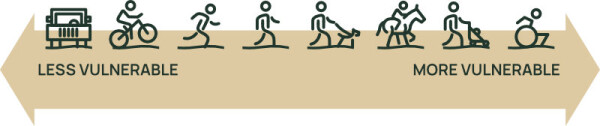
Note: this spectrum is a guide – the vulnerability of path users may vary. When in doubt, the Golden Rule prevails: Share with care.
For all path users
- Share with respect—everyone has the right to enjoy the outdoors.
- Slow down near others, and approach blind corners and blind rises at walking pace.
- Smile, wave, and greet—courtesy makes sharing easier.
- Leave gates as you find them.
- Watch out for children and mobility-impaired users—they need extra care.
- Stay on the trail and do not cut corners.
- Take your rubbish home with you.
- Thank other users for giving way.
Walkers and runners
- Keep left and stay alert.
- Go single file on narrow paths or when being passed.
- Give way to horse riders, and pass wide and slow.
Wheeled riders (including cyclists, MTBs, scooters and e-bikes)
- Stay in control and ride at a safe speed.
- Give way to walkers and horses.
- Use a bell or voice when approaching others. Avoid large “bike trains.”
- Ride predictably and signal your intentions.
- Slow down and go wide when approaching and passing other users— especially those with dogs or horses.
Dog walkers
- Keep dogs on a short lead; sudden movements can cause accidents.
- In off-lead areas, your dog must still be under your control.
- If your dog is anxious, use a harness or lead that signals this.
- Pick up your dog's poo and take it home.
Horse riders
- Ride single file, at walking pace.
- Avoid muddy areas and soft ground where practicable.
- Remove any manure from the trail.
Meeting horses and other animals
- Approach horses slowly and calmly, and speak so they know you’re human.
- Give way to horses or pass wide (2 metres minimum) at a slow pace. Never rush past stock, dogs or other animals.
- Horses can be startled or alarmed by speed, sudden movements, backpacks, buggies, or loud noises.
Other recreationists
- Motorised vehicles give way to all other users, including bikes, walkers, and horses.
- E-powered vehicles and similar: ring a bell, slow on blind corners, and respect speed limits.
- If unsure, check with the track manager or local council.
For planners and consenters
- Plan for inclusivity—avoid unintentionally excluding users.
- Separate users where safety demands, but enable sharing wherever viable.
- Consider signs, education, and long-term maintenance in consent decisions.
For controlling authorities, builders and track maintainers
- Design for multiple users where possible—walkers, riders, horses, and mobility devices.
- Use clear signs to show who can use the track and any priority rules.
- Maintain good sightlines and safe surfaces; blind corners and blind rises need extra care.
- Communicate restrictions clearly and consistently along the path, including whether bikes, dogs, or horses are not allowed and whether speed limits apply.