
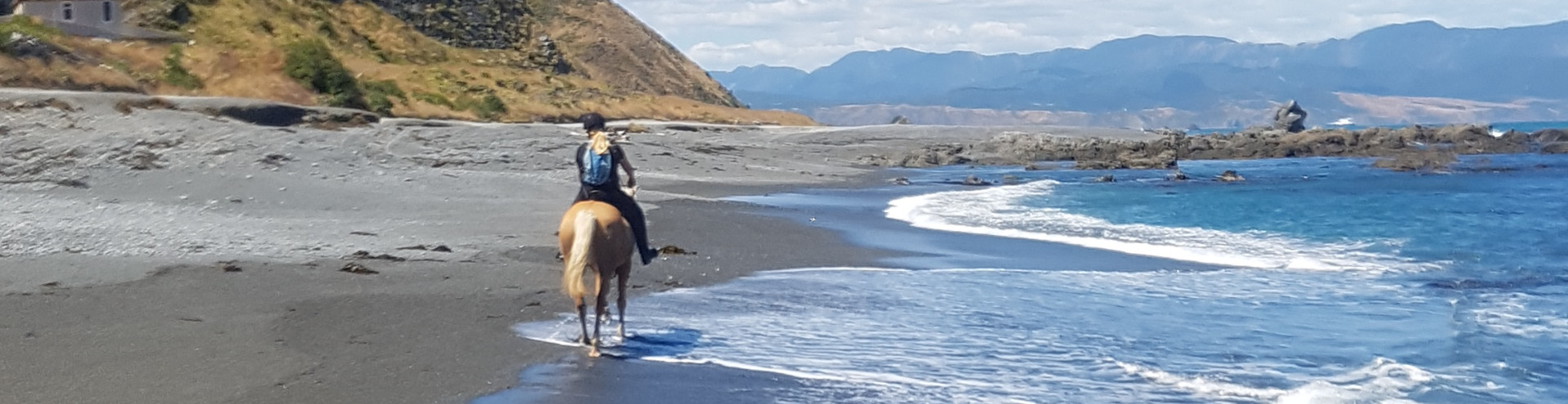
Horse riding responsibly
Horse riders are welcome in many outdoor places. Riding responsibly helps keep that access open. The commission advocates for outdoor access for horse riders.
Some people are afraid of horses, and many know little about how horses behave. Be patient and friendly with everyone you meet.
Before you ride
- Read our advice for sharing paths, tracks and trails, especially the golden rule: slow down, give space, and be courteous
- Check that you can ride there. Rules differ for roads, unformed legal roads, walkways, conservation land, council parks and beaches. Our maps show public access areas, but not specific horse rider access.
- Get permission to cross private land. Ask the landholder first. Your local riding club or council may know who owns the land.
- Ask the owners before you ride on Māori land.
- Check for seasonal closures. Farms may be closed to riders during lambing.
On the trail
Greet other users. A friendly hello lets walkers and cyclists know you have seen them and helps them see you.
- Give way. On narrow tracks, slow down and be ready to stop.
- Let faster users pass and be courteous to slower ones.
- Explain politely how to pass your horse safely.
- Stay on marked tracks and trails. Ride off-track only if you are sure it is allowed.
- Slow to a walk on muddy or soft ground to reduce damage.
- Stay out of sensitive areas, such as wāhi tapu, historic sites and archaeological sites.
- Stop your horse from eating the wrong plants. Some plants are harmful, and native plants need protecting.
On farms
- Leave gates as you find them, unless a sign says otherwise.
- Ride slowly through stock paddocks and give stock time to move away. Take extra care in spring.
- Follow all signs and notices on the property.
- Ask the landholder before you bring a dog.
On beaches
Check that riding is allowed at that beach. Some beaches need a permit or limit riding by season. Read the signs at the access point.
- Check tide times before you go. Some beaches allow riding only at low or mid tide, and some become dangerous or impassable at high tide.
- Ride below the high tide mark. The sand is usually firmer, and the tide disperses manure.
- Stay out of the dunes unless there is a marked track. Dune plants hold the sand in place, and damage can cause blowouts.
- Watch for nesting birds. Many coastal birds, including threatened species, nest on open sand and shell banks, and their nests are hard to see. Avoid shell banks in nesting season (usually spring and summer).
- Follow DOC signs.
In forests
Get permission first. Most forests are privately owned, and you usually need a permit or key from the forest manager. Each rider needs their own. Read our advice on forest permits.
- Follow the forest rules.
- Do not enter active harvesting areas or go near forestry machinery. Give way to logging trucks on forest roads.
- Expect hunters, dogs and wildlife. Deer and pigs can startle horses. Ask the forest manager if hunters are around.
On roads
You can ride on roads, but you must follow the road rules. The NZ Transport Agency (NZTA) advises riders to:
- always wear a helmet
- ride on the left, as far left as possible
- stay off footpaths, lawns and gardens
- ride no more than two abreast, and in single file on narrow roads or near bends
- keep any led animal on your left, away from traffic
- wear reflective clothing and carry a torch if you ride at night.
Drivers should slow down, give horses plenty of room, and avoid sounding horns or revving engines.
Travelling and parking
- Pull over when it’s safe to let other vehicles pass if you are towing a float. The speed limit when towing is 90 km/h.
- Do not clean out your float or truck in the parking area. Use manure bins if they are provided. If there are none, take manure home.
- On busy tracks used by non-riders, move manure off the track where you can, or return after your ride to remove it.
Protecting the environment
While horses are no more likely to spread weeds than walkers or bikers, horses can carry soil, seeds and disease between places.
- Clean soil and plant matter from your gear, your horse’s coat and its hooves before and after every ride.
- Keep hay and feed that may contain weed seeds out of native reserves and parks.
- In kauri forest, stay on the track and follow the kauri dieback guidelines for horse riders. Clean off all soil. Avoid using water unless the run-off is contained.
- Check, clean and dry your gear between waterways to stop freshwater pests.
- Be careful with fire. Check fire restrictions before you ride.
- Be careful of ground-nesting birds in spring and summer. There are threatened species that nest in braided riverbeds and in tussock grassland.
For landholders and land managers
Horse riders can be good visitors. Here is what to expect.
- Horse hooves are no more likely to spread weeds than walkers’ boots, bike tyres or vehicles. You can ask riders to clean their hooves and gear before they arrive.
- Riders cannot practically scoop manure while riding. Most make an effort to keep public areas clear, and horse owners should remove manure from parking areas.
- Horses and stock generally coexist well. Most stock tolerate a quiet horse.
- Riders need a spacious parking area suitable for large trucks or vehicles with trailers.
- Water is appreciated, but riders usually bring what they need.
- If you are worried about wet-weather damage, ask riders to use only farm tracks or formed trails when it is wet. Most riders do not want to risk bogging or slipping.
- Riders can help compact new trails and keep remote tracks open. They can reach places few other visitors do.
- Riders try to stop their horses from eating native plants.
Our page on health and safety obligations covers your responsibilities to visitors.