
Permit access to plantation forests
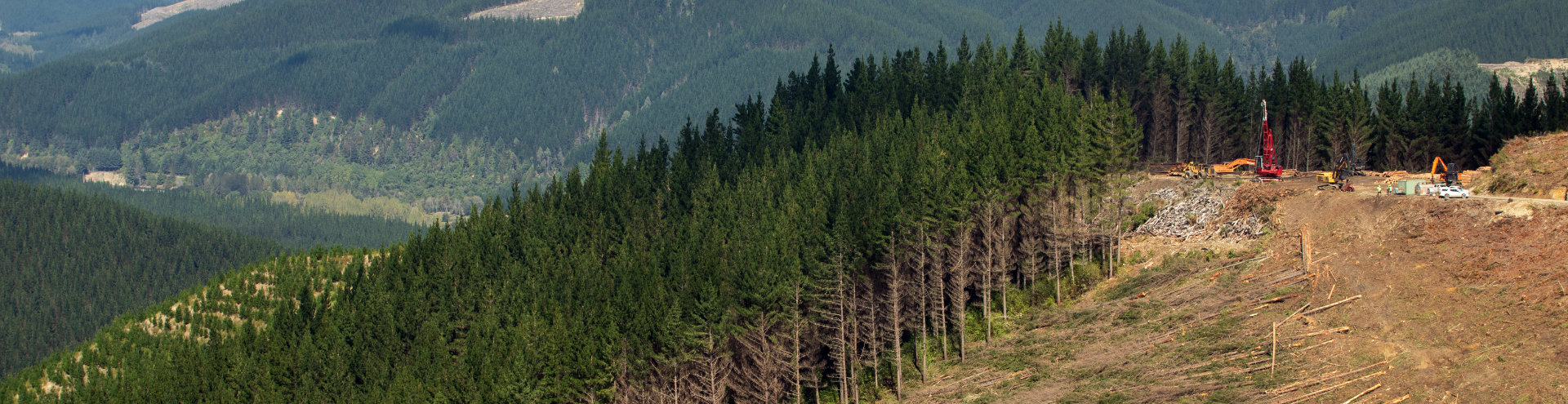
Many commercial forest owners use a permit system to allow the public to access their forests. It’s worth understanding how these work, because they are an underused opportunity for very good tramping, hunting, and mountain biking.
Permit systems
Forest access permits are written permission from the landowner or forest manager to enter their land for a specific purpose — walking, mountain biking, hunting, fishing, horse riding, or driving. They are usually for a set period, sometimes covering a specific activity or area.
They exist because of the health and safety hazards in a working forest, such as logging trucks, harvesting machinery, unstable ground after felling, and controlled hunting programmes, mean that land managers need to know who else is on the land at the same time.
A permit lets the forest owner keep track of who’s in the forest, when, and why, and provides a lawful basis to exclude people when it’s unsafe, such as during harvesting operations or on total fire ban days.
Permits are not the same as most forms of public access, such as a marginal strip, an unformed legal road, or a Public Access Easement (PAE), which are legal rights that do not require anyone’s permission (see below). A permit is discretionary — the landowner can decline an application and can suspend or revoke a permit if conditions are breached.
Some examples
OneFortyOne — Nelson, Tasman, and Marlborough
OneFortyOne manages roughly 80,000 hectares in Te Tau Ihu. Public Access Easements allow access to Mount Richmond Forest Park without a permit, but walking, biking, or horse riding access to the rest of the forest requires an access permit, applied for using a downloadable form. A separate permit process exists for hunting.
Wenita Forest Products — Otago
Wenita runs its Otago plantation access entirely through an online booking system, with separate booking categories for general access, weekday limited general access, hunting, and motorcycle riding.
Summit Forests New Zealand — Northland, Coromandel, Gisborne, and Whanganui
Summit manages access for hunting, fishing, walking, horse riding, cycling, motorsports, and general recreation through permits, applied for online or by phone. In its Whanganui forests, a hybrid system is in place: walkers and mountain bikers do not need a permit between sunrise and sunset on Sundays and public holidays, but they do need a permit the rest of the time. Access to Ninety Mile Beach / Te Oneroa-a-Tōhe through Te Hiku Forest also uses a hybrid access system, while walking access and some biking access to Whangapoua Forest require a permit.
Kaingaroa and Rotoehu Forests — Bay of Plenty / Central North Island
First Security administers an online annual permit system on behalf of Kaingaroa Tipu. If you are 15 or older, you can apply for hunting, fishing, or gamebird access by completing a health and safety induction, passing an online quiz, supplying ID and paying a $50 annual fee. Automatic gates control entry hours on weekends and public holidays.
Many other forestry companies have comparable permit systems around the country. Fish & Game has also brokered arrangements for fishing access to many forests around the country.
Getting a permit
The process varies by company, but it is fairly consistent:
- Identify who manages the forest you want to access — an online search for the forest’s name plus “access” or “permit” usually works.
- Check the company’s website for a dedicated access or permits page — most of the larger operators now have one.
- Complete an application. This is often online and sometimes includes a short safety induction or quiz.
- Provide identification and, if applicable, vehicle or firearms licence details.
- Pay any fee. These can vary, but in the example above, it is $50 a year.
- Wait for approval. This can take one to three weeks. Then read the conditions that come with the permit, including gate hours, no-go zones, and closures during harvesting or fire season.
Companies with online permit application systems
- OneFortyOne (Nelson, Tasman, Marlborough)
- Wenita Forest Products (Otago)
- Summit Forests New Zealand (Northland, Gisborne, Whanganui)
- Tasman Pine Forests Ltd (Nelson)
- Ernslaw One (multiple regions, including Otago, Marlborough, Manawatū). Naseby Forest in Otago is a named exception with open, permit-free access.
- Southwood Export Ltd (Southland)
- Kaingaroa and Rotoehu Forests (Kaingaroa Tipu, Bay of Plenty/Central North Island)
- Matariki Forests (multiple regions)
- City Forests (Dunedin)
Sharing the knowledge
Many hunters and mountain bikers already know the permit process of their local forestry company. But much of the wider public does not know that permit-based access is an option and assumes a working forest is closed to them by default. The companies above have provided access opportunities — now we all need to make sure people know to ask.
Other legal access that may run through a forest
Even where permit access does not exist, a forest block can carry other forms of legal public access:
- Roads. Unformed legal roads (“paper roads”) can run through or alongside forestry land and give the public the same right of passage as a formed road. There is no difference in law just because a forest has grown up around one.
- Marginal strips. Many forestry blocks adjoining rivers or lakes have a 20-metre strip of public conservation land along the water, reserved when the Crown land was first sold.
- Public access easements (PAEs). Where a forest sits on former Crown forestry licence land, it may carry a registered PAE created under the Crown Forest Assets Act 1989. These generally allow public access on foot, by bike, by motorcycle, or by light vehicle between roads and public conservation land. Importantly, the public access rights continue even where the licence or land has since passed to iwi ownership through a Treaty settlement. Access can still be closed at night, for safety, or to protect trees and equipment.
Accessing a working forest responsibly
Forests are working sites, and access carries some practical obligations:
- Where access requires a permit, contact the forest owner in advance to arrange it.
- Follow signs and barriers restricting access. These are often in place because of active forestry operations or elevated fire risk.
- Follow the guidelines in the Outdoor Access Code
- Do not light fires, and do not cut, fell or remove trees or other forest produce (some FSC-certified forests permit cultural harvest under a specific arrangement).
- Observe any restrictions on driving, hunting, and dogs.
Where the commission can help
The commission comments on public access during the review of a forest’s Forest Stewardship Council (FSC) certification. If a forestry company is being unreasonable about required access, the commission can raise this with FSC assessors during that review.
If you believe you have a right of public access to an area and it’s being blocked, get in touch with your regional field advisor.